
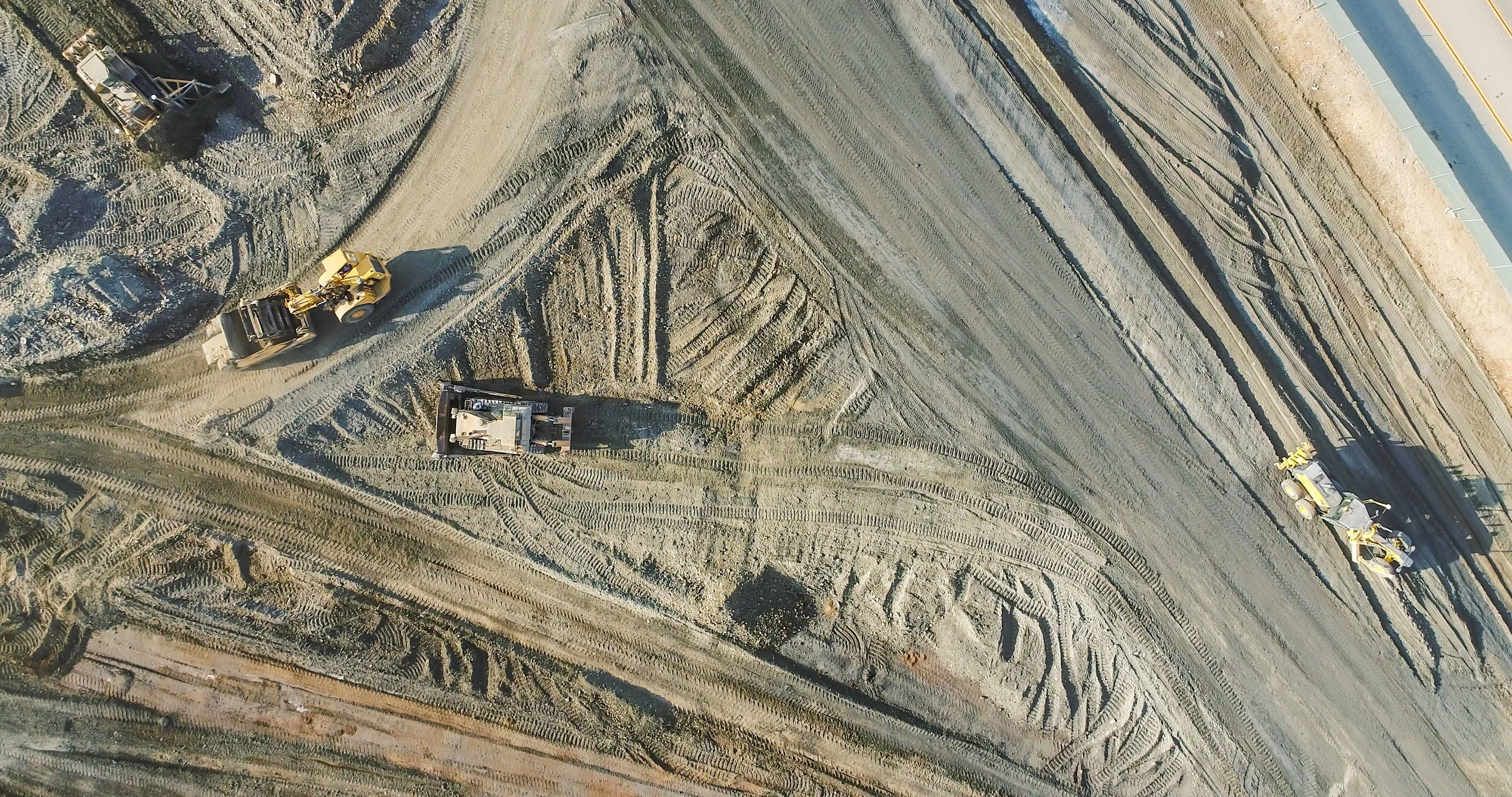
Phase I Environmental Site Assessment in Lowell, MA
Lowell anchors one of Massachusetts' most active mill redevelopment and environmental markets, sitting at the confluence of the Merrimack and Concord rivers where Interstate 495, U.S. Route 3, and the Lowell Connector meet. Property owners, developers, contractors, municipalities, and counsel working across the Merrimack Valley and greater Boston region rely on focused, locally informed environmental due diligence. Resource Renewal supports these projects through RCC's ASTM E1527-21 Phase I Environmental Site Assessment scope, layered with Massachusetts Contingency Plan compliance support so projects carry both federal CERCLA landowner protections and Chapter 21E eligible person status.
Resource Renewal connects three service tracks under one platform: ASTM E1527-21 Phase I ESAs and MassDEP-aligned release assessments delivered by RCC; Phase II Site Investigations and Remedial Investigations when Recognized Environmental Conditions are identified; and full remediation and brownfield redevelopment delivered with our affiliated platform DSR. Project teams coordinate with the MassDEP Northeast Regional Office and pursue site closure under Licensed Site Professional oversight toward a Permanent Solution under the Massachusetts Contingency Plan.
Why Property Owners and Developers in Middlesex County Choose Resource Renewal
Resource Renewal's headquarters at 10 Lippincott Lane sits inside the Resource Renewal Business Park, a completed brownfield redevelopment project, and a working proof point for the methodology RCC and DSR apply to client sites across Middlesex County and the Merrimack Valley.
- ASTM E1527-21 Phase I ESA
- Massachusetts Contingency Plan overlay
- Phase II Site Investigation
- Soil & groundwater investigation
- LSP-led MassDEP closure pursuit
- Brownfield redevelopment via DSR
- Active project work in 5 states
- 30+ years of regional project history
Environmental Context in Lowell and Middlesex County
Industrial and Commercial Heritage
Lowell was founded in the 1820s as a planned textile manufacturing center, named for Francis Cabot Lowell, and its mills were powered by the Pawtucket Falls through an extensive canal system that still threads through downtown. By the 1850s Lowell held the largest industrial complex in the United States. The Boott Mills and neighboring complexes were later joined by machine shops, foundries, dye and bleach works, and — in the twentieth century — the electronics manufacturing of Wang Laboratories. That layered industrial history drives Phase I ESA recommendations today, with former dry cleaners, gas stations, plating shops, and small-scale chemical operations distributed through the downtown core and along the Interstate 495 and Route 3 corridors.
Current Environmental Profile
MassDEP waste site cleanup records show active and closed disposal sites distributed throughout Lowell and Middlesex County. Common regional contaminants include chlorinated solvents (PCE, TCE) from historic dry cleaning and metal degreasing operations, petroleum hydrocarbons (TPH, BTEX) from former service stations and underground storage tanks, and heavy metals from textile dyeing, finishing, and metal fabrication. Soil vapor intrusion has become a significant focus during residential and mixed-use conversion of former mill parcels. PFAS investigation is now a standard component of Phase II scope near former firefighting training areas, plating shops, and textile sites, a profile shared across the Merrimack Valley.
Real Estate and Development Market
Middlesex County is the most populous county in Massachusetts and one of the most active redevelopment markets in New England. In Lowell, the Hamilton Canal District — governed by its own form-based code and master plan — has driven sustained adaptive reuse of former industrial parcels beside the canals, alongside institutional growth at UMass Lowell, Middlesex Community College, and Lowell General Hospital. That activity drives steady Phase I ESA transaction volume across Chelmsford, Dracut, Billerica, Tewksbury, and the surrounding communities.
Local Regulators, Authorities, and Stakeholders
The MassDEP Northeast Regional Office in Woburn provides waste site cleanup oversight for Lowell and the rest of Middlesex County, and response actions are carried out under the oversight of a Licensed Site Professional. Routine touchpoints during Phase II and remedial action work include the City of Lowell's Development Services division, the Planning Board, the Zoning Board of Appeals, and the Conservation Commission. Redevelopment in the downtown mill districts frequently involves the Lowell Historic Board, and parcels adjoining federal property may require coordination with Lowell National Historical Park. Regional planning runs through the Northern Middlesex Council of Governments, and federal matters route to EPA Region 1 in Boston.
Why This Local Context Matters for Your Project
Local industrial history, the current contaminant profile, regulator office assignments, and real estate transaction velocity all feed directly into Phase I scoping decisions and downstream remediation planning. Three decades of regional project work mean RCC crews already know how MassDEP's Northeast region handles file reviews, the typical release profiles encountered in former mill corridors, and the surrounding parcels that recur in historical use research. That institutional familiarity shortens timelines and sharpens the recommendations delivered in each report.
Environmental Services Available to Lowell, MA Projects
Service availability spans two connected tracks: Investigation & Compliance, including transactions, financing, and regulatory closure documentation, and Remediation & Redevelopment, including physical cleanup, environmental liability transfer, and conversion of impaired real estate. RCC and DSR jointly cover the full project lifecycle from pre-acquisition due diligence through final regulatory closure and redevelopment.
Phase I Environmental Site Assessment
ASTM E1527-21 site assessment with Massachusetts Contingency Plan overlay for Lowell and Middlesex County properties.
Phase II Environmental Site Assessment
Subsurface sampling and certified laboratory analysis when RECs are identified during Phase I.
Site Investigation
Comprehensive site characterization, soil sampling, groundwater investigation, soil vapor assessment.
Environmental Remediation
In-situ and ex-situ soil and groundwater remediation, OM&M, and pursuit of regulatory closure.
Regulatory Compliance
Permitting, audits, hazardous waste management, SPCC plans, MassDEP agency liaison.
Brownfield Redevelopment
Acquisition, remediation, and redevelopment of impaired Massachusetts real estate through DSR.
Environmental Liability Transfer
DSR-led liability transfer for owners seeking to exit impaired sites.
Landfill Closure
Closure, post-closure care, and EPA LMOP-aligned beneficial reuse options through DSR's TB2G™ model.
How Resource Renewal Serves Lowell, MA
Investigation & Compliance (RCC Track)
The ASTM E1527-21 Phase I ESA scope covers site reconnaissance, historical land use review, regulatory database searches, agency file reviews, and key personnel interviews. RCC layers the federal ASTM scope with Massachusetts Contingency Plan documentation so projects in Massachusetts carry both federal CERCLA innocent purchaser protections and a credible pathway to a Permanent Solution or, where conditions warrant, a Temporary Solution or Remedy Operation Status. When Recognized Environmental Conditions or Areas of Concern are identified, RCC moves directly into Phase II Site Investigation and, where warranted, Remedial Investigation — coordinating sampling plans, certified laboratory analysis, and data evaluation under the Massachusetts Contingency Plan, 310 CMR 40.0000. Documentation is built for MassDEP review and Licensed Site Professional certification.
Remediation & Redevelopment (DSR-Affiliated Track)
Remediation capabilities include in-situ chemical oxidation, bioremediation, soil vapor extraction, ex-situ excavation and disposal, groundwater pump-and-treat systems, permeable reactive barriers, sub-slab depressurization, and long-term operations, maintenance, and monitoring (OM&M). For owners exiting impaired property, the DSR platform provides brownfield acquisition, environmental liability transfer, and full redevelopment, applied across more than 100 brownfield sites in NJ, NY, PA, MA, and OH. The Mount Holly HQ at the Resource Renewal Business Park is itself a representative example of a former brownfield converted into productive operating real estate.
Frequently Asked Questions
-
Resource Renewal serves Lowell and Middlesex County from its Mount Holly, NJ headquarters. The Resource Renewal Business Park at 10 Lippincott Lane is a completed brownfield redevelopment project and the home base for RCC and DSR field crews. Middlesex County communities served alongside Lowell include Chelmsford, Dracut, Billerica, Tewksbury, Westford, and Woburn, together with the wider Merrimack Valley and greater Boston market.
-
A Phase I Environmental Site Assessment is a documented review of a property's current and historical use, performed under ASTM E1527-21, that identifies Recognized Environmental Conditions and Areas of Concern. Typical triggers include commercial real estate transactions, lender requirements, attorney due diligence, pre-redevelopment review, and refinancing. RCC pairs the ASTM Phase I ESA with Massachusetts Contingency Plan compliance support to provide combined federal CERCLA protections and Chapter 21E eligible person status. In Lowell and Middlesex County, the property types most likely to trigger Phase I work are former mill buildings, industrial and automotive sites, fuel storage properties, and dry cleaning sites.
-
A typical Phase I ESA runs two to three weeks from authorization to draft delivery, depending on environmental database turnaround, depth of historical research, agency file review timing, and site access. MassDEP file reviews at the Northeast Regional Office in Woburn are scheduled by appointment, which is factored into the schedule. RCC can accelerate timelines for time-sensitive transactions when scope and access permit. Under ASTM E1527-21, a Phase I ESA is valid for 180 days, with extensions of up to one year possible if specific components are refreshed.
-
When Recognized Environmental Conditions are identified, the natural next step is a Phase II Site Investigation: a defined sampling plan, certified laboratory analysis, and data evaluation against Massachusetts Contingency Plan standards. If a reportable release is confirmed, RCC develops the response actions required under M.G.L. Chapter 21E, working toward a Permanent Solution under Licensed Site Professional oversight. For owners who prefer to exit the property rather than carry it through closure, DSR brownfield acquisition and environmental liability transfer are available as an alternative path.
-
DSR is Resource Renewal's brownfield redevelopment company, with experience across more than 100 brownfield sites in NJ, NY, PA, MA, and OH. DSR services include site evaluation, environmental liability transfer, and full redevelopment. DSR is a member of the EPA Landfill Methane Outreach Program and the Brownfield Coalition of the Northeast, and applies its Turn Brown to Green™ (TB2G™) model for landfill closure and beneficial reuse. EPA Brownfields Program grants and incentives may apply to qualifying Lowell and Middlesex County sites.
-
Under M.G.L. Chapter 21E and the Massachusetts Contingency Plan (310 CMR 40.0000), contaminated sites are assessed and remediated under Licensed Site Professional oversight rather than direct MassDEP case management. The LSP defines the technical approach, files the required submittals, and renders the professional opinion supporting closure once site conditions meet applicable cleanup standards. The outcome sought is a Permanent Solution; where conditions do not yet allow one, a Temporary Solution or Remedy Operation Status may apply, and an Activity and Use Limitation may be recorded to restrict future site use. Closure documentation supports transactions, financing, and redevelopment.
-
Middlesex County is the most populous county in Massachusetts and one of New England's most active redevelopment markets. In Lowell, adaptive reuse of nineteenth-century mill complexes, the form-based-code redevelopment of the Hamilton Canal District, and institutional growth around UMass Lowell, Middlesex Community College, and Lowell General Hospital have driven sustained conversion of former industrial parcels into housing, office, and mixed-use space. Each of those transactions typically triggers a Phase I ESA from lenders or institutional buyers. Volume has been particularly visible in Lowell, Chelmsford, Dracut, Billerica, and Tewksbury.
-
The Resource Renewal Business Park at 10 Lippincott Lane is itself a brownfield redevelopment project that moved through the same investigation, remediation, regulatory closure, and reuse process RCC and DSR deliver for clients. It is a working demonstration that contaminated parcels can move from environmental liability to productive operating real estate when investigation, remediation, regulatory strategy, and redevelopment are executed by an integrated team. Prospective clients are welcome to walk the site as part of project scoping.
Visit Our Mount Holly, NJ HQ or Find Us Near You
The Resource Renewal Business Park
10 Lippincott Lane, Unit 1
Mount Holly, NJ 08060
For ASTM E1527-21 Phase I ESA, Phase II Site Investigation, remediation, regulatory compliance, or brownfield redevelopment support on a Lowell, MA project, contact Resource Renewal directly. Project work in Massachusetts is delivered under Licensed Site Professional oversight and the Massachusetts Contingency Plan, with field crews mobilizing from our Mount Holly HQ. Call (856) 273-1009 or request a project consultation.