
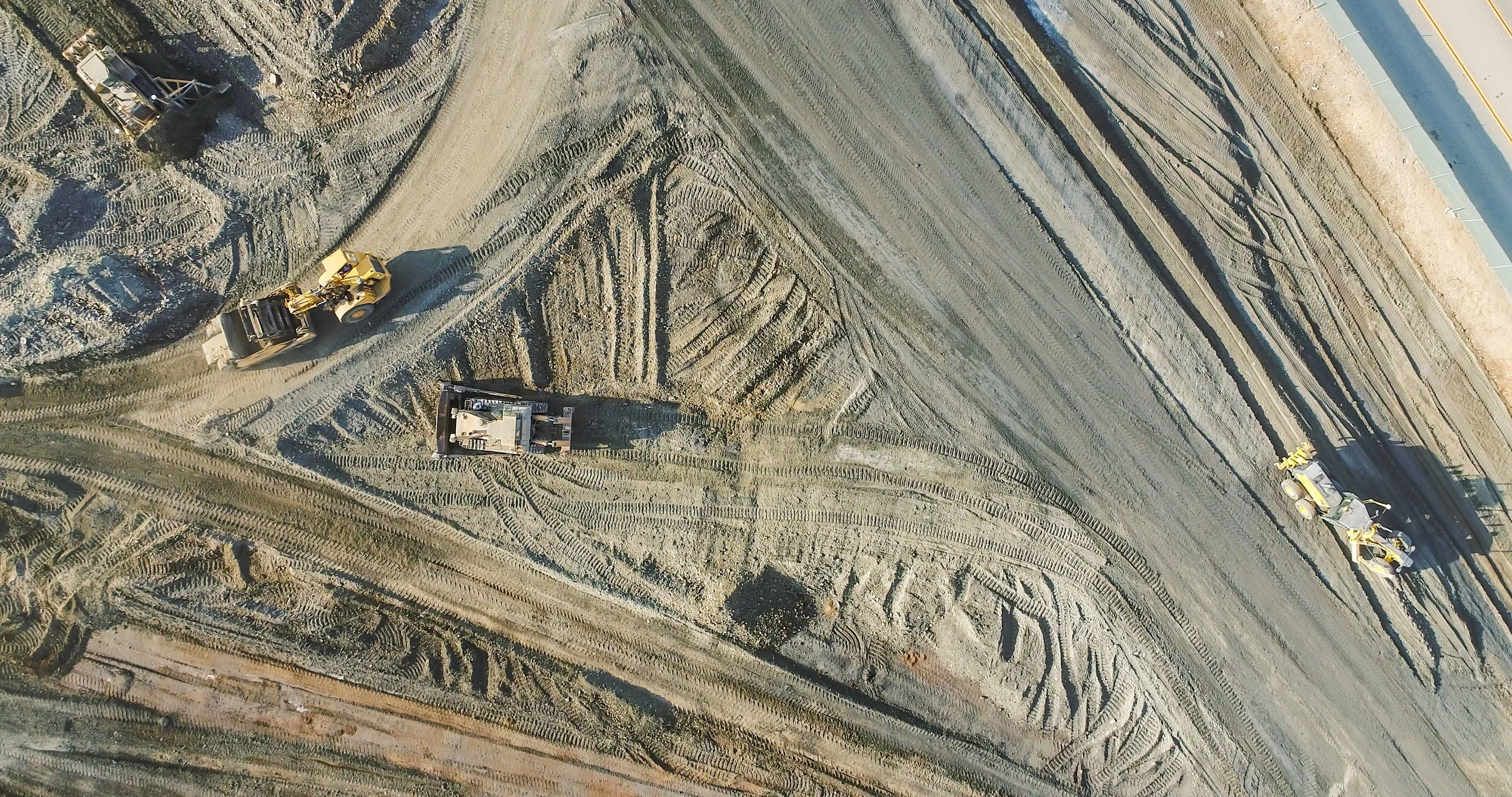
Phase I Environmental Site Assessment in Philadelphia, PA
Philadelphia is the Delaware Valley's largest redevelopment market and one of the most active brownfield economies in the Mid-Atlantic — from the Navy Yard's mixed-use buildout and the Schuylkill industrial corridor to the Port of Philadelphia, the University City research and healthcare district, and decades of legacy manufacturing parcels across North, South, and West Philadelphia. Property owners, developers, contractors, municipalities, and counsel working across the Philadelphia metro and Delaware Valley region rely on focused, locally informed environmental due diligence. Resource Renewal supports these projects through RCC's ASTM E1527-21 Phase I Environmental Site Assessment scope, layered with PA DEP-aligned Act 2 readiness to deliver both federal and Pennsylvania Act 2 release-of-liability protections.
Resource Renewal connects three service tracks under one platform: ASTM E1527-21 Phase I ESAs and PA DEP-aligned Act 2 assessments delivered by RCC; Phase II Site Investigations and Remedial Investigations when Recognized Environmental Conditions are identified; and full remediation and brownfield redevelopment delivered with our affiliated platform DSR. Project teams coordinate with the NJDEP Site Remediation Program and pursue site closure under LSRP oversight toward a Response Action Outcome (RAO).
Why Property Owners and Developers in the Philadelphia Metro Choose Resource Renewal
Resource Renewal's Mount Holly headquarters at 10 Lippincott Lane sits inside the Resource Renewal Business Park, a completed brownfield redevelopment project, and a working proof point for the methodology RCC and DSR apply to client sites across the Philadelphia metro — from Center City and the Navy Yard to the Schuylkill industrial corridor, the Port of Philadelphia, University City, and the surrounding five-county region.
- ASTM E1527-21 Phase I ESA
- NJDEP Preliminary Assessment overlay
- Phase II Site Investigation
- Soil & groundwater investigation
- LSRP-led NJDEP closure pursuit
- Brownfield redevelopment via DSR
- Active project work in 5 states
- 30+ years of NJ project history
Environmental Context in Philadelphia and the Delaware Valley
Industrial and Commercial Heritage
Philadelphia's industrial legacy is among the most extensive in the country — shipbuilding and naval operations at the Navy Yard, refining and petrochemicals along the lower Schuylkill, textile and metalworking across Kensington and Frankford, and rail and freight corridors knitting it all together. Phase I ESAs in Philadelphia routinely surface former MGP sites, USTs, historic fill, dry cleaners, and metal-finishing operations through Sanborn maps, city directories, and PA DEP file reviews.
Current Environmental Profile
PA DEP records show a deep distribution of active and closed cleanup sites across Philadelphia and the surrounding counties. Common contaminants include chlorinated solvents (PCE, TCE) from historic dry cleaning and metal-finishing operations, petroleum hydrocarbons (TPH, BTEX) from former service stations and underground storage tanks, and heavy metals from legacy manufacturing, refining, and rail operations. Soil vapor intrusion is a recurring focus on redevelopment of former industrial parcels, and PFAS investigation is now standard scope near former firefighting training areas, plating shops, and textile sites — a profile common across the Delaware Valley.
Real Estate and Development Market
Philadelphia's redevelopment market is shaped by Act 2 brownfield closures, Keystone Opportunity Zones, City of Philadelphia tax abatement programs, and aggressive multifamily, life-sciences, and logistics demand. Former industrial parcels in Fishtown, Kensington, Point Breeze, Grays Ferry, and along the Delaware and Schuylkill consistently move through Phase I ESA at acquisition and refinancing, with strong continuing demand from the Navy Yard, University City, and Port of Philadelphia redevelopment programs.
Local Regulators, Authorities, and Stakeholders
Cleanup work at Philadelphia properties operates primarily under the Pennsylvania Department of Environmental Protection (PA DEP) through the Land Recycling Program established by Act 2, with statewide cleanup standards, release-of-liability protection, and a defined pathway from site characterization through final report and approval. Philadelphia projects also frequently coordinate with the City of Philadelphia, the Philadelphia Industrial Development Corporation (PIDC), the Philadelphia Redevelopment Authority, the Navy Yard's operating partners, and the Port of Philadelphia / PhilaPort. RCC's Phase I scope is built to feed cleanly into Act 2 site characterization where subsurface work follows.
Why This Local Context Matters for Your Project
Phase I findings in Philadelphia carry direct implications for transaction timing, lender requirements, redevelopment incentive eligibility, and the trajectory of any follow-on Phase II or Act 2 characterization work. Philadelphia's deep industrial history, PA DEP records density, soil vapor intrusion risk on former industrial parcels, and the institutional pace of the Navy Yard, Port of Philadelphia, and University City all shape what a Phase I needs to surface — and what should not be missed before closing, financing, or breaking ground on a Philadelphia site.
Environmental Services Available to Philadelphia Projects
Service availability spans two connected tracks: Investigation & Compliance, including transactions, financing, and regulatory closure documentation, and Remediation & Redevelopment, including physical cleanup, environmental liability transfer, and conversion of impaired real estate. RCC and DSR jointly cover the full project lifecycle from pre-acquisition due diligence through final regulatory closure and redevelopment.
Phase I Environmental Site Assessment
ASTM E1527-21 site assessment with NJDEP Preliminary Assessment overlay for Mount Holly and Burlington County properties.
Phase II Environmental Site Assessment
Subsurface sampling and certified laboratory analysis when RECs are identified during Phase I.
Site Investigation
Comprehensive site characterization, soil sampling, groundwater investigation, soil vapor assessment.
Environmental Remediation
In-situ and ex-situ soil and groundwater remediation, OM&M, and pursuit of regulatory closure.
Regulatory Compliance
Permitting, audits, hazardous waste management, SPCC plans, NJDEP agency liaison.
Brownfield Redevelopment
Acquisition, remediation, and redevelopment of impaired NJ real estate through DSR.
Environmental Liability Transfer
DSR-led liability transfer for owners seeking to exit impaired sites.
Landfill Closure
Closure, post-closure care, and EPA LMOP-aligned beneficial reuse options through DSR's TB2G™ model.
How Resource Renewal Serves Philadelphia
Investigation & Compliance (RCC Track)
The ASTM E1527-21 Phase I ESA scope covers site reconnaissance, historical land use review, regulatory database searches, agency file reviews, and key personnel interviews. RCC layers the federal ASTM scope with an NJDEP-compliant Preliminary Assessment so projects carry both federal CERCLA and NJ ISRA innocent purchaser protections. When Recognized Environmental Conditions or Areas of Concern are identified, RCC moves directly into Phase II Site Investigation and, where warranted, Remedial Investigation — coordinating sampling plans, certified laboratory analysis, and data evaluation under NJDEP Site Remediation Program Tech Rules. Documentation is built for NJDEP review and LSRP certification.
Remediation & Redevelopment (DSR-Affiliated Track)
Remediation capabilities include in-situ chemical oxidation, bioremediation, soil vapor extraction, ex-situ excavation and disposal, groundwater pump-and-treat systems, permeable reactive barriers, sub-slab depressurization, and long-term operations, maintenance, and monitoring (OM&M). For owners exiting impaired property, the DSR platform provides brownfield acquisition, environmental liability transfer, and full redevelopment, applied across more than 100 brownfield sites in NJ, NY, PA, MA, and OH. The Mount Holly HQ at the Resource Renewal Business Park is itself a representative example of a former brownfield converted into productive operating real estate.
Frequently Asked Questions
-
Yes — Philadelphia and the surrounding five-county metro are core service areas. Resource Renewal is headquartered at 10 Lippincott Lane, Mount Holly, NJ, roughly 30 minutes from Center City Philadelphia via the Tacony-Palmyra Bridge or the Betsy Ross / I-95 corridor. From this HQ, RCC and DSR field crews work across Philadelphia, Bucks, Montgomery, Delaware, and Chester counties — including the Navy Yard, Schuylkill industrial corridor, Port of Philadelphia, University City, Fishtown, Kensington, Point Breeze, and the surrounding Pennsylvania municipalities.
-
A Phase I Environmental Site Assessment is a documented review of a property's current and historical use, performed under ASTM E1527-21, that identifies Recognized Environmental Conditions and Areas of Concern. Typical triggers include commercial real estate transactions, lender requirements, attorney due diligence, pre-redevelopment review, and refinancing. RCC scopes the Phase I to align with Pennsylvania Department of Environmental Protection (PA DEP) expectations under Act 2, so projects carry both federal CERCLA innocent purchaser protection and a clean entry point into the Land Recycling Program. In Philadelphia, the property types most likely to trigger Phase I work include Navy Yard parcels, lower Schuylkill industrial sites, port-adjacent properties, former MGP and refinery-adjacent parcels, urban manufacturing in Kensington, Fishtown, Point Breeze, and Grays Ferry, and University City research and healthcare campuses.
-
A typical Phase I ESA runs two to three weeks from authorization to draft delivery, depending on environmental database turnaround, depth of historical research, agency file review timing, and site access. For Philadelphia projects, PA DEP file reviews and Act 2-aligned record searches can modestly extend the timeline, particularly on legacy industrial, waterfront, or refinery-adjacent parcels. RCC can accelerate timelines for time-sensitive transactions when scope and access permit. Under ASTM E1527-21, a Phase I ESA is valid for 180 days, with extensions of up to one year possible if specific components are refreshed.
-
When Recognized Environmental Conditions are identified on a Philadelphia property, the natural next step is a Phase II Site Investigation: a defined sampling plan, certified laboratory analysis, and data evaluation against PA DEP standards. If contamination is confirmed, RCC develops a Remedial Investigation and a Remedial Action plan structured to meet PA DEP's Act 2 site characterization standards, with the goal of a release of liability under the Land Recycling Program. For owners who prefer to exit the property rather than carry it through closure, DSR brownfield acquisition and environmental liability transfer are available as an alternative path — a model especially relevant in Philadelphia's deep brownfield inventory.
-
Yes. DSR is Resource Renewal's brownfield redevelopment company, with experience across more than 100 brownfield sites in NJ, NY, PA, MA, and OH. DSR services include site evaluation, environmental liability transfer, and full redevelopment, with experience directly applicable to Philadelphia's Navy Yard, lower Schuylkill, refinery-adjacent, port-industrial, and urban manufacturing redevelopment inventory. DSR is a member of the EPA Landfill Methane Outreach Program and the Brownfield Coalition of the Northeast, and applies its Turn Brown to Green™ (TB2G™) model for landfill and brownfield reuse — a strong fit for Pennsylvania Act 2 closure pathways.
-
For Philadelphia and PA sites generally, cleanup follows the Land Recycling and Environmental Remediation Standards Act of 1995 — commonly known as Act 2 — administered by PA DEP. Act 2 provides three pathway options (background standard, statewide health standard, and site-specific standard), with a structured progression from notice of intent through site characterization, remedial action, and final report. Upon PA DEP approval, the owner receives a release of liability tied to the achieved standard. The Act 2 framework is the principal route to regulatory closure on commercial and industrial Philadelphia properties and is the natural follow-on pathway when a Phase I ESA identifies Recognized Environmental Conditions warranting further investigation.
-
Philadelphia anchors the Delaware Valley with the largest concentration of brownfield inventory, port-industrial activity, and institutional redevelopment in the region. The Navy Yard's life-sciences and mixed-use buildout, the lower Schuylkill industrial corridor, the Port of Philadelphia's marine terminals, and the University City research and healthcare cluster around Penn, Drexel, CHOP, and Penn Medicine generate continuous Phase I demand from developers, lenders, institutions, and counsel. Pennsylvania's Act 2 framework provides a well-defined regulatory pathway that environmentally complex projects can leverage from acquisition through closure, sustaining strong Phase I ESA volume across Philadelphia, Bucks, Montgomery, Delaware, and Chester counties.
-
The Resource Renewal Business Park at 10 Lippincott Lane is itself a brownfield redevelopment project — a working proof point for the same Phase I, Phase II, remediation, and brownfield redevelopment methodology RCC and DSR apply to client sites in Philadelphia. From Mount Holly, our teams reach Center City Philadelphia in about 30 minutes via the Tacony-Palmyra Bridge or the Betsy Ross / I-95 corridor, and cover Bucks, Montgomery, Delaware, and Chester counties on a same- or next-day basis for the majority of Phase I engagements.
Visit Our Mount Holly, NJ HQ or Find Us Near You
The Resource Renewal Business Park
10 Lippincott Lane, Unit 1
Mount Holly, NJ 08060
For ASTM E1527-21 Phase I ESA, Phase II Site Investigation, remediation, regulatory compliance, or brownfield redevelopment support on a Mount Holly, NJ project, contact Resource Renewal directly. Project work in New Jersey is delivered under LSRP oversight, with field crews mobilizing from our Mount Holly HQ. Call (856) 273-1009 or request a project consultation.