
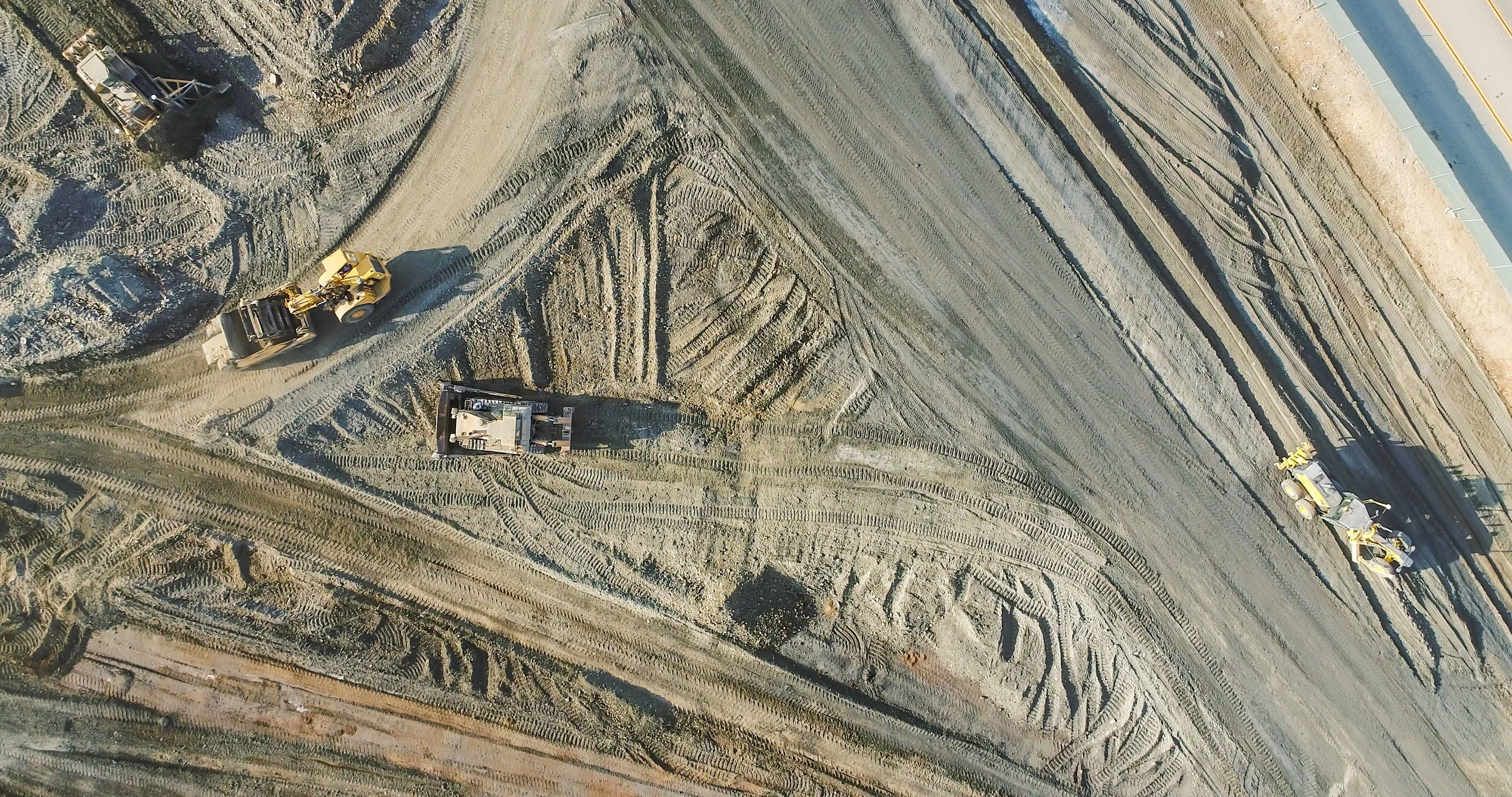
Phase I Environmental Site Assessment in Wilmington, DE
Wilmington anchors Delaware's most active environmental and redevelopment market, sitting at the confluence of the Christina River and Brandywine Creek along I-95, I-495, US-13, and US-202. Property owners, developers, contractors, municipalities, and counsel working across New Castle County and the Delaware Valley rely on focused, locally informed environmental due diligence. Resource Renewal supports these projects through RCC's ASTM E1527-21 Phase I Environmental Site Assessment scope, layered with DNREC Hazardous Substance Cleanup Act screening to deliver both federal innocent purchaser protections and a defensible path to state closure.
Resource Renewal connects three service tracks under one platform: ASTM E1527-21 Phase I ESAs and DNREC-aligned Phase I screening delivered by RCC; Phase II Site Investigations and Remedial Investigations when Recognized Environmental Conditions are identified; and full remediation and brownfield redevelopment delivered with our affiliated platform DSR. Project teams coordinate with the DNREC Division of Waste and Hazardous Substances Remediation Section and pursue site closure under the Hazardous Substance Cleanup Act toward a Certificate of Completion of Remedy.
Why Property Owners and Developers in New Castle County Choose Resource Renewal
Wilmington sits roughly 45 miles southwest of Resource Renewal's Mount Holly headquarters, making New Castle County one of the closest markets to our home base. The city also straddles the Fall Line, where the rocky Piedmont west of Market Street gives way to the flat, low-lying Atlantic Coastal Plain along the Christina River. That split matters on every assessment: west-side sites sit on shallow bedrock and fractured-rock groundwater, while the eastern riverfront is built largely on placed fill over tidal marsh, with shallow groundwater, tidal influence, and elevated vapor intrusion risk.
- ASTM E1527-21 Phase I ESA
- NJDEP Preliminary Assessment overlay
- Phase II Site Investigation
- Soil & groundwater investigation
- LSRP-led NJDEP closure pursuit
- Brownfield redevelopment via DSR
- Active project work in 5 states
- 30+ years of NJ project history
Environmental Context in Wilmington and New Castle County
Industrial and Commercial Heritage
Wilmington was settled in 1638 as Fort Christina and chartered as a city in 1832. Eleuthere Irenee du Pont began making gunpowder on Brandywine Creek in 1802, seeding both the DuPont Company and later Hercules Inc., and the Brandywine's water power drew textile operations including Joseph Bancroft & Sons at Bancroft Mills. Along the Christina, Harlan & Hollingsworth, Pusey and Jones, and Jackson & Sharp built iron ships and railroad cars, while the Lobdell Car Wheel Company cast wheels until the early 1930s. By 1868 Wilmington was first in the nation in gunpowder and second in carriages and leather, with a substantial morocco leather tanning trade. That combination of explosives, chemicals, shipbuilding, railcars, textiles, and tanning defines the due diligence profile across the city today.
Current Environmental Profile
DNREC records show HSCA, brownfield, and underground storage tank activity concentrated along the Christina River corridor, Southbridge, the East Side, Browntown, and the Brandywine mill reach. Recurring findings include hydraulic and industrial fill of unknown provenance on the riverfront; metals, lead paint, asbestos, and PCBs from shipyard and railcar operations; chromium and sulfide residues from morocco leather tanning; dye, solvent, and mill waste at textile sites; heavy metals and pigment residues from chemical manufacturing; coal gas and MGP residues; and petroleum from rail, marine, and fleet fueling. Tidal sediment in the Christina and Delaware adds a separate line of inquiry on waterfront parcels.
Real Estate and Development Market
New Castle County is Delaware's economic center and Wilmington is its county seat. Redevelopment activity concentrates on the Wilmington Riverfront built out by the Riverfront Development Corporation, including Justison Landing, Frawley Stadium, the Chase Center, and the Shipyard Shops; the Riverfront East project at 112 A Street reached by the new Christina River Bridge; the DuPont Environmental Education Center at the Russell W. Peterson Urban Wildlife Refuge; the Northeast Brandywine Riverfront on former Hercules property; Bancroft Mills; and the former General Motors Boxwood Road assembly plant. Each of those settings turns on the same question a Phase I has to answer clearly: what did the prior industrial use leave behind, and how much of it is still there.
Local Regulators, Authorities, and Stakeholders
The DNREC Division of Waste and Hazardous Substances Remediation Section, formerly the Site Investigation & Restoration Section, provides HSCA oversight from 391 Lukens Drive in New Castle, a short drive from Wilmington. Routine touchpoints during Phase I and Phase II work include HSCA and brownfield file reviews, the DNREC Environmental Navigator and tank records, Brownfield Development Agreement negotiation for Certified Brownfield Sites, and coordination with the Riverfront Development Corporation of Delaware, New Castle County Land Use, WILMAPCO, and the City of Wilmington planning and licenses and inspections departments.
Why This Local Context Matters for Your Project
Local industrial history, the current contaminant profile, regulator office assignments, and real estate transaction patterns in Wilmington and New Castle County shape how each scope is built. Resource Renewal writes Wilmington scopes against Delaware Valley and Coastal Plain conditions rather than generic templates, so findings hold up with lenders, DNREC reviewers, and counsel pursuing a Certificate of Completion of Remedy.
Environmental Services Available to Wilmington, DE Projects
Service availability spans two connected tracks: Investigation & Compliance, including transactions, financing, and regulatory closure documentation, and Remediation & Redevelopment, including physical cleanup, environmental liability transfer, and conversion of impaired real estate. RCC and DSR jointly cover the full project lifecycle from pre-acquisition due diligence through final regulatory closure and redevelopment.
Phase I Environmental Site Assessment
ASTM E1527-21 site assessment with NJDEP Preliminary Assessment overlay for Mount Holly and Burlington County properties.
Phase II Environmental Site Assessment
Subsurface sampling and certified laboratory analysis when RECs are identified during Phase I.
Site Investigation
Comprehensive site characterization, soil sampling, groundwater investigation, soil vapor assessment.
Environmental Remediation
In-situ and ex-situ soil and groundwater remediation, OM&M, and pursuit of regulatory closure.
Regulatory Compliance
Permitting, audits, hazardous waste management, SPCC plans, NJDEP agency liaison.
Brownfield Redevelopment
Acquisition, remediation, and redevelopment of impaired NJ real estate through DSR.
Environmental Liability Transfer
DSR-led liability transfer for owners seeking to exit impaired sites.
Landfill Closure
Closure, post-closure care, and EPA LMOP-aligned beneficial reuse options through DSR's TB2G™ model.
How Resource Renewal Serves Wilmington, DE
Investigation & Compliance (RCC Track)
The ASTM E1527-21 Phase I ESA scope covers site reconnaissance, historical land use review, regulatory database review, and interviews, and it satisfies All Appropriate Inquiries for CERCLA landowner liability protection. On Wilmington properties that scope is typically read alongside Delaware's Hazardous Substance Cleanup Act, where work proceeds under DNREC Remediation Section oversight through the Voluntary Cleanup Program or a Brownfield Development Agreement under 7 Del. C. Ch. 91, toward a Certificate of Completion of Remedy.
Remediation & Redevelopment (DSR-Affiliated Track)
Remediation capabilities include in-situ chemical oxidation, bioremediation, soil vapor extraction, ex-situ excavation and disposal, groundwater treatment, and vapor intrusion mitigation. On Wilmington sites, cleanup is measured against DNREC unrestricted, restricted residential, or non-residential use standards depending on the intended reuse, with engineering and institutional controls used where riverfront fill, tannery residues, or shipyard-era metals make unrestricted closure impractical.
Frequently Asked Questions
-
Mount Holly is Resource Renewal's headquarters city. The Resource Renewal Business Park at 10 Lippincott Lane is a completed brownfield redevelopment project and the home base for RCC and DSR field crews working across Burlington County. Surrounding municipalities served from this HQ include Burlington, Westampton, Lumberton, Eastampton, Hainesport, Pemberton, Cinnaminson, Maple Shade, Moorestown, Cherry Hill, Marlton, and Medford.
-
A Phase I Environmental Site Assessment is a documented review of a property's current and historical use, performed under ASTM E1527-21, that identifies Recognized Environmental Conditions and Areas of Concern. Typical triggers include commercial real estate transactions, lender requirements, attorney due diligence, pre-redevelopment review, and refinancing. RCC pairs the ASTM Phase I ESA with an NJDEP-compliant Preliminary Assessment to provide combined federal CERCLA and NJ ISRA innocent purchaser protections. In Mount Holly and Burlington County, the property types most likely to trigger Phase I work are industrial, automotive, agricultural, fuel storage, and dry cleaning sites.
-
A typical Phase I ESA runs two to three weeks from authorization to draft delivery, depending on environmental database turnaround, depth of historical research, agency file review timing, and site access. RCC can accelerate timelines for time-sensitive transactions when scope and access permit. Layered NJDEP Preliminary Assessment work is coordinated within the same engagement. Under ASTM E1527-21, a Phase I ESA is valid for 180 days, with extensions of up to one year possible if specific components are refreshed.
-
When Recognized Environmental Conditions are identified, the natural next step is a Phase II Site Investigation: a defined sampling plan, certified laboratory analysis, and data evaluation against NJDEP standards. If contamination is confirmed, RCC develops a Remedial Investigation and a Remedial Action Workplan, pursuing a Response Action Outcome under LSRP oversight. For owners who prefer to exit the property rather than carry it through closure, DSR brownfield acquisition and environmental liability transfer are available as an alternative path.
-
DSR is Resource Renewal's brownfield redevelopment company, with experience across more than 100 brownfield sites in NJ, NY, PA, MA, and OH. DSR services include site evaluation, environmental liability transfer, and full redevelopment. DSR is a member of the EPA Landfill Methane Outreach Program and the Brownfield Coalition of the Northeast, and applies its Turn Brown to Green™ (TB2G™) model for landfill closure and beneficial reuse. EPA Brownfields Program grants and incentives may apply to qualifying Mount Holly and Burlington County sites.
-
Under the NJ Site Remediation Reform Act of 2009, contaminated sites are remediated under Licensed Site Remediation Professional oversight rather than direct NJDEP case management. The LSRP defines the technical approach, files key submissions, and issues a Response Action Outcome when site conditions meet applicable remediation standards. Typical sequencing is Preliminary Assessment, Site Investigation, Remedial Investigation, Remedial Action, and final RAO issuance. The RAO confirms regulatory closure and supports transactions, financing, and redevelopment.
-
Burlington County is New Jersey's largest county by land area and one of the most active warehouse and distribution development markets in the Northeast. The I-295 / NJ Turnpike Exit 5 / Route 38 corridor and proximity to the Port of Philadelphia have driven sustained conversion of agricultural and former industrial parcels into large-format warehouse, fulfillment, and last-mile distribution facilities. Each of those transactions typically triggers a Phase I ESA from lenders or institutional buyers. Volume has been particularly visible in Mount Holly, Westampton, Burlington Township, Florence, and Mansfield.
-
The Resource Renewal Business Park at 10 Lippincott Lane is itself a brownfield redevelopment project that moved through the same investigation, remediation, regulatory closure, and reuse process RCC and DSR deliver for clients. It is a working demonstration that contaminated parcels can move from environmental liability to productive operating real estate when investigation, remediation, regulatory strategy, and redevelopment are executed by an integrated team. Prospective clients are welcome to walk the site as part of project scoping.
Visit Our Mount Holly, NJ HQ or Find Us Near You
The Resource Renewal Business Park
10 Lippincott Lane, Unit 1
Mount Holly, NJ 08060
For ASTM E1527-21 Phase I ESA, Phase II Site Investigation, remediation, regulatory compliance, or brownfield redevelopment support on a Wilmington, DE project, contact Resource Renewal directly. Project work in Delaware is delivered under the DNREC Hazardous Substance Cleanup Act framework, with field crews mobilizing from our Mount Holly HQ roughly 45 miles away. Call (856) 273-1009 or request a project consultation.